
The Project Management Certification is a professional certification program designed to develop practical skills in project planning, scheduling, budgeting, risk management, team leadership, stakeholder communication, Agile methodologies, Scrum, and project execution. The course combines industry best practices with hands-on projects, preparing learners for careers in project management, operations, IT, construction, manufacturing, consulting, healthcare, and business management across various industries.
Explore Course
→
Begin Your Career in Community Healthcare and Nursing
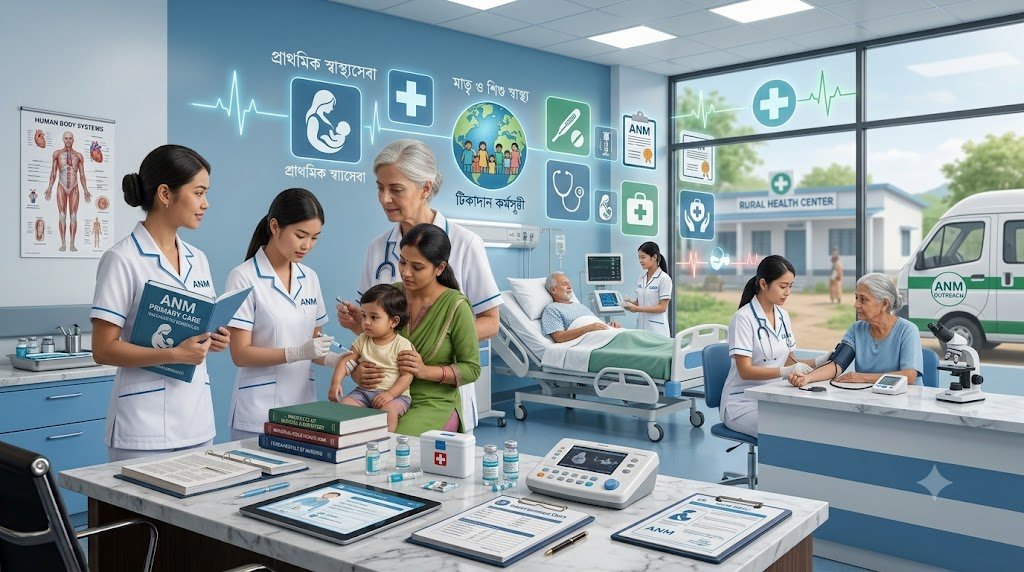
The Auxiliary Nurse Midwife (ANM) is a professional diploma program designed for students who aspire to build a career in nursing, community healthcare, and maternal and child welfare. The course focuses on developing practical nursing skills, health education, preventive care, and community-based healthcare services to support individuals and families across urban and rural areas.
Students receive hands-on clinical training in hospitals, primary health centers, and community healthcare settings. The curriculum emphasizes patient care, immunization, maternal health, newborn care, nutrition, first aid, and disease prevention, preparing graduates to become skilled frontline healthcare professionals.
Whether you wish to work in government healthcare programs, hospitals, community health centers, or continue your education in nursing, an ANM qualification provides a strong foundation for a meaningful healthcare career.
ANM Course Highlights
| Feature | Details |
|---|---|
| Course Name | Auxiliary Nurse Midwife (ANM) |
| Course Level | Diploma Program |
| Duration | 2 Years |
| Eligibility | 10+2 from a Recognized Board (Eligibility may vary by institution and regulatory guidelines) |
| Learning Mode | Regular |
| Admission Process | Merit-Based / Entrance Exam / Institution Guidelines |
| Career Opportunities | ANM Nurse, Community Health Worker, Health Assistant, Primary Healthcare Worker, Home Care Nurse |
| Higher Education | GNM, Post Basic Nursing Programs, Specialized Healthcare Certifications |
About the ANM Course
The Auxiliary Nurse Midwife program is designed to prepare healthcare professionals who can provide essential nursing care, maternal and child health services, immunization support, and community healthcare. The curriculum combines classroom education with practical clinical training, enabling students to develop confidence in delivering quality healthcare services.
Students learn about primary healthcare, disease prevention, nutrition, first aid, reproductive health, family welfare, and public health awareness while gaining practical experience through hospital and community postings.
Why Choose an ANM Course?
An Auxiliary Nurse Midwife program offers several professional and career advantages.
- Quick entry into the healthcare sector
- Strong demand for healthcare professionals
- Practical hospital and community training
- Opportunities in government health programs
- Meaningful work supporting community health
- Foundation for higher nursing education
- Stable career opportunities
- Contribution to maternal and child healthcare
Skills You Will Develop
During the ANM program, students develop essential healthcare skills, including:
- Basic Nursing Care
- Maternal & Child Healthcare
- Community Health Services
- Immunization Support
- First Aid & Emergency Care
- Patient Communication
- Health Education
- Infection Prevention
- Record Keeping
- Teamwork
- Critical Thinking
- Professional Ethics
ANM Course Eligibility
Candidates who have completed 10+2 (Higher Secondary) from a recognized board are generally eligible to apply for the ANM program, subject to the admission requirements of the institution and applicable regulatory authorities.
Course Duration
The ANM program is generally completed in 2 years, including classroom learning, practical laboratory sessions, hospital training, and community healthcare fieldwork.
Subjects Covered in ANM
The curriculum may vary by institution but generally includes:
- Community Health Nursing
- Health Promotion
- Primary Healthcare
- Child Health Nursing
- Midwifery
- Maternal Healthcare
- Nutrition
- First Aid
- Infection Control
- Environmental Hygiene
- Psychology
- Sociology
- Health Education
- Clinical Training
- Community Field Visits
Career Opportunities After ANM
An ANM qualification provides employment opportunities across healthcare and public health sectors.
Popular Job Roles
- Auxiliary Nurse Midwife (ANM)
- Community Health Worker
- Health Assistant
- Primary Healthcare Worker
- Vaccination Officer
- Home Healthcare Assistant
- Rural Health Worker
- Maternal Healthcare Assistant
- Child Health Worker
- NGO Healthcare Worker
- Clinic Assistant
- Public Health Support Staff
Industries Hiring ANM Graduates
Graduates can work in:
- Government Hospitals
- Primary Health Centers (PHCs)
- Community Health Centers (CHCs)
- Rural Health Missions
- Private Hospitals
- Nursing Homes
- NGOs
- Maternal & Child Health Programs
- Home Healthcare Services
- Public Health Departments
- Clinics
- Wellness Centers
Higher Education After ANM
Students can continue their education through:
- General Nursing and Midwifery (GNM)
- Post Basic Nursing Programs
- B.Sc Nursing (subject to eligibility requirements)
- Community Health Certifications
- Public Health Programs
- Specialized Nursing Courses
Benefits of Studying ANM
The ANM program combines academic learning with practical clinical training, helping students develop the skills needed to deliver primary healthcare services, support maternal and child health, and contribute to community wellness. Graduates become valuable healthcare professionals serving both urban and rural communities.
Why Choose Our Admission Guidance?
Our admission experts help students choose the right nursing institution and provide complete assistance throughout the admission process.
Our Support Includes
- Free Career Counseling
- College Selection Guidance
- Admission Assistance
- Documentation Support
- Application Process Help
- Fee Structure Guidance
- Scholarship Information
- Dedicated Student Support